


Ford Mustang EcoBoost vs. Mustang GT: Which Fits Central Alabama Drivers?
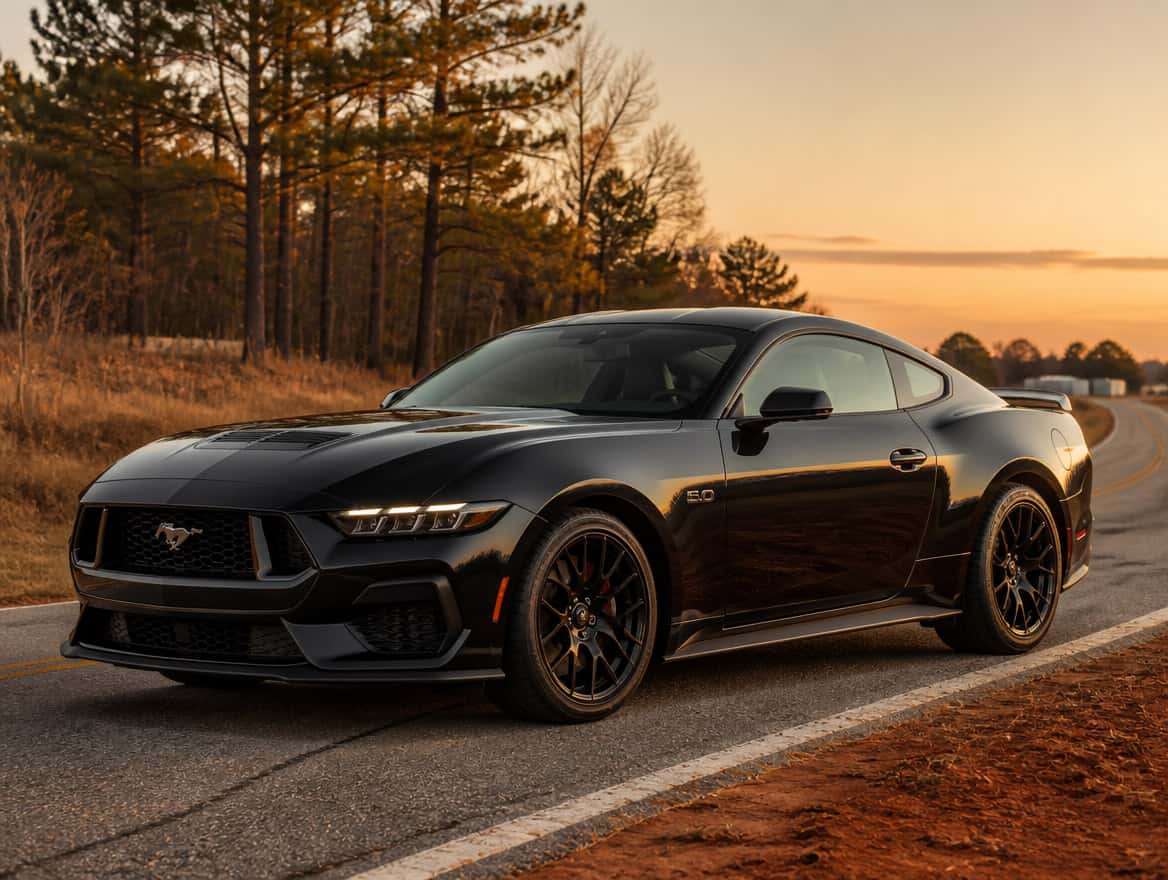
There are a lot of different ways to configure and order a new 2026 Ford Mustang, but one of the biggest questions comes down to engine choice: are you going with the thrifty but potent 2026 Ford Mustang EcoBoost or is it worth stepping up to the eight-cylinder grunt of the 2026 Ford Mustang GT?
For most drivers in Montgomery and the River Region, the Mustang EcoBoost is probably the smarter daily choice. Its 2.3-liter turbocharged engine delivers 315 horsepower and an EPA-estimated 33 mpg on the highway, which matters plenty during the daily grind. That said, it’s easy for emotion to trump logic when buying a sporty car like a Mustang, and the Mustang GT’s 480-horsepower 5.0-liter V-8 is certain to make the heart of any enthusiast start racing – especially if they’ve always longed for that familiar eight-cylinder burble.
What Does the Numbers Difference Actually Mean for a Montgomery Driver?
The EPA rates the 2026 Mustang EcoBoost at 22 MPG city and 33 MPG highway. The Mustang GT with the 10-speed automatic comes in at 16 MPG city and 24 MPG highway. On the kind of stop-and-go running central Alabama throws at you every morning (I-65 backing up past the Herron Street split, or the I-85 corridor stacking east toward Carmichael Road), the city number is the one you actually live with. That gap of 6 mpg in the city shows up in your tank every week once you’re running the climate control hard through a Montgomery summer.
The GT is no penalty-box car to drive every day, and plenty of GT owners do exactly that. The caveat stays simple. If your Mustang is pulling daily duty across Montgomery, the EcoBoost lets the turbo work quietly and with real efficiency. The GT rewards you with something else, a naturally aspirated V-8 that nobody else in the American market is still building in a car at this price. That matters to a specific kind of buyer, and it should.
| Decision Factor | EcoBoost (2.3L Turbo I4) | GT (5.0L Coyote V-8) |
|---|---|---|
| Horsepower | 315 hp | 480 hp (486 hp w/ Active Valve Exhaust) |
| Torque | 350 lb-ft | 415 lb-ft (418 lb-ft w/ exhaust) |
| 0-60, 10-speed auto | ~4.5 sec | ~4.3 sec |
| EPA City MPG | 22 | 16 |
| EPA Highway MPG | 33 | 24 |
| Fuel Required | Regular 87 octane | Regular 87 octane |
| Transmission Choice | 10-speed auto standard | 6-speed manual or 10-speed auto |
| Best Fit | Daily driver, highway commuter | Weekend driver, V-8 loyalist |
Browse the 2026 Mustang lineup at Stivers Ford of Montgomery
Does the EcoBoost Actually Feel Like a Mustang?
Of course, the EcoBoost feels like a Mustang! Both the EcoBoost and the GT ride on Ford’s S650 platform. Same chassis architecture. Virtually the same suspension hardware. The EcoBoost carries less mass over the front axle, so it turns with a crispness that pays off every day.
Pull onto a dry on-ramp and the 315 horsepower and 350 lb-ft of torque arrive with real urgency. Reaching 60 mph in about 4.5 seconds isn’t slow by any measure.
Sure, the Mustang GT is a little quicker, but where it truly separates itself is in its character. A naturally aspirated 5.0-liter V-8 with no turbo lag, an immediate connection between throttle and revs, and a sound a four-cylinder simply cannot reproduce is absolutely addictive. And with the demise of both the V-8-powered Camaro and Challenger, the 2026 Mustang GT is the last naturally aspirated eight-cylidner American muscle car you can buy. That matters to a specific kind of buyer, and it may well matter to you.
See financing options at Stivers Ford of Montgomery
Which Model Makes More Sense if You’re Buying Your First Mustang?
The Mustang EcoBoost is probably the best starting point for a first Mustang, especially for younger buyers who may be on a tighter budget. Sure, there’s no V-8 underhood, but the car is still a Mustang through and through, providing that same sporty spirit and much of the same driving experience. Better yet, you’ll also have a lighter fuel bill, especially if you’re planning on using it as a daily driver.
Despite being the “entry-level” Mustang, the EcoBoost still offers an amazing amount of available content, including a 12.4-inch digital instrument cluster paired with a 13.2-inch touchscreen, along with SYNC 4 infotainment technology. You don’t sacrifice the driving experience, you just swap the V-8 note for turbocharged efficiency and a lighter fuel bill through Montgomery’s long summer.
The Mustang makes the most sense if you’re specifically after the V-8. When someone already knows what a naturally aspirated V-8 feels like and that’s what brings them to the dealership, we’ll say so without hesitation. The 480 horsepower, the Coyote engine note, and the choice of a proper 6-speed manual with rev-matching are worth it for that buyer.
See the full 2026 Mustang lineup at Stivers Ford of Montgomery
Explore Your Financing Options
Frequently Asked Questions
Does the Mustang EcoBoost require premium fuel?
No, neither the EcoBoost nor the Mustang GT require premium fuel. Higher octane fuels may improve performance ever so slightly in certain circumstances, but both engines are engineered, tested, and approved by Ford to utilize 87 octane fuel.
How much slower is the EcoBoost compared to the GT?
The 2026 EcoBoost with the 10-speed automatic reaches 60 mph in approximately 4.5 seconds. The GT automatic does the same run in approximately 4.3 seconds. That’s a 0.2-second difference, which you won’t perceive in everyday driving. The GT’s real advantage over the EcoBoost is felt at high RPM through the naturally aspirated Coyote V8 character, not in drag-strip numbers that sit this close together.
Is the 2026 GT really the last V-8 American muscle car?
Right now, it sure seems so, as both the Camaro and Challenger are no more. For buyers who care about that context, it’s a legitimate reason to consider shopping the GT over the EcoBoost.
Find Out What Your Trade-In Is Worth
0 comment(s) so far on Ford Mustang EcoBoost vs. Mustang GT: Which Fits Central Alabama Drivers?